
No products in the cart.
Table of Contents
When you buy premium machine lubricants and liquid fragrances, you want high-octane performance every time you open the bottle. However, as these goods are composed of highly volatile alkyl nitrites such as amyl, pentyl, or propyl nitrites, their chemical stability is mostly dependent on the post-arrival treatment at your door.
If you open a beloved bottle and find it’s flat, stale, or has a disagreeable smell, the cause is almost certainly a bad storage condition. Knowing how to store poppers properly is the single most crucial key in retaining their original intensity, protecting your investment and providing a predictable experience from the first pop to the very last drop.
In this detailed guide, we’ll get into the nitty-gritty science of nitrite breakdown, cover the best storage conditions, debunk preservation fallacies, and give you a step-by-step plan to keep your stash as fresh as possible.
Why Liquid Aromas Require Special Handling
Alkyl nitrites are naturally unstable compounds. They are meant to evaporate swiftly upon contact with the outside air; this is how they relinquish their potent, fragrant qualities.
However, their high volatility means that they are very sensitive to three critical environmental triggers: oxygen, heat, and light.
Then the liquid is exposed to these elements, and a chemical process called hydrolysis occurs. The activity of active nitrites is gradually lost during hydrolysis, and they are converted into acidic byproducts.
This chemical breakdown can render your bottle utterly useless, leading to major structural issues or a strange chemical bite. But with a few simple storage methods, you can halt this deteriorating process in its tracks.
How Long Do Poppers Last? The Reality of Product Lifespans
One of the most frequent questions within the community is: how long do poppers last? The answer depends entirely on whether the factory seal has been broken.
| Bottle Status | Estimated Lifespan |
| Unopened (Factory Sealed) | 6 to 12 Months |
| Opened (In-Use) | 2 to 4 Weeks (Average) |
Unopened Bottles
Premium formulae have a rather robust timeline when stored in their original vacuum-sealed state. An unopened bottle will readily maintain its chemical integrity for a year or more if kept in a cold, dark place from the time it is received.
Opened Bottles
The second you breach the seal, the countdown alters drastically. Every time you open the cap, you introduce ambient air into the container. This carries moisture and oxygen.
As a general rule, a bottle that is used regularly will be at its peak strength for roughly two to four weeks. Beyond this window you will probably see a tapering down of intensity.
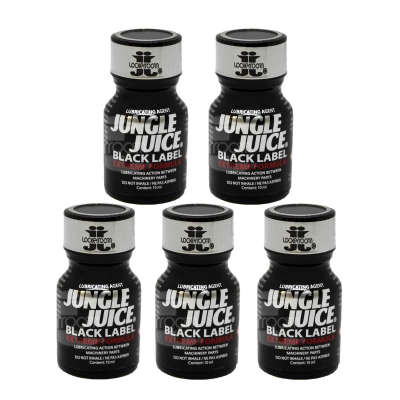
To avoid running out mid-experience, it is always smart to stock up on legendary, long-lasting options like Jungle Juice Black from Aussie Poppers.
Do Poppers Expire? Recognizing the Signs of a Stale Bottle
It is a frequent fallacy that these liquid aromas will keep their chemical composition forever as long as the cap is screwed on tightly. So do poppers go bad? Yes, they do.
They do not contain standard artificial preservatives; thus, they have a natural expiration point that is increased by environmental exposure. The use of a product that is outdated or deteriorating is strongly advised because the chemical composition can be changed and create unnecessary physical discomfort.
Fortunately, you don’t need a laboratory kit to see if your inventory has turned. These three different warning indicators make it easy to recognize an expired bottle:
- The Scent Test: Fresh nitrites have a very distinct, pungent, and reasonably clean chemical scent that is unique to the exact blend of formula. A bottle that starts to smell like damp laundry, stale socks, or rotten eggs have fallen prey to moisture contamination and should be destroyed immediately.
- Visuals: Premium products should be translucent pale golden in hue and crystal clear. If you observe cloudiness, floating particles, or a black, murky stain at the bottom of the glass, the drink is bad.
- Excessive Evaporation and Pressure: If the bottle hisses loudly every time you open it or if the liquid content has substantially diminished with minimal use, the active ingredients have broken down into gas, and the remaining combination is jeopardized.
How to Store Poppers — The Golden Rules
If you want your collection to live past its expiration date, you need a rigorous storage technique. A few basic rules for keeping your stuff in tip-top shape:
1. Maintain an Upright Position
Store your bottles upright at all times. Glass bottles are quite robust, but if they are left lying down for a long time, the liquid can decompose or react with the synthetic lining of the plastic top.
The bottle should be kept upright such that the liquid only touches the inert walls of the glass so that there are no microscopic leaks and failure of the structural seal.
2. Shield Inventory from Direct Light
Ultraviolet radiation can break chemical bonds quite easily. That is why respectable global brands pack their medications in amber, brown, or opaque glass bottles.
But these dark bottles offer only minimal protection. Keep your collection inside a completely dark drawer, a specialized storage box, or a closet spot that gets no direct sunlight.
3. Cool and Stable Environment
Your products will decay twice as rapidly in warm rooms, and this will accelerate the chemical reactions.
The best temperature for storing your collection is 10°C to 15°C. Never keep your bottles near household heat sources such as computer desks, sunny windowsills, or laundry rooms.
Managing Your Poppers Shelf Life: The Cold Storage Debate
During discussions on increasing your total poppers shelf life, refrigeration is an issue that comes up regularly. Can you keep your collection in the refrigerator or freezer? The answer is yes, but only if you use a very rigid process.
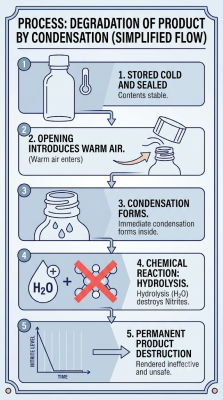
In cold places, chemical degradation is significantly slower; therefore, the fridge is a wonderful place to store unopened, factory-sealed backup bottles to make them last longer. But there’s a huge danger in storing an opened bottle in cold storage: condensation
Alt text: infographic showing how do poppers expire
Bring a very cold bottle into a warm room. When you remove the cap, the difference in temperature will quickly cause moisture to condense inside the neck of the bottle. The water drips into the liquid and hydrolyzes it instantaneously, destroying the batch.
The Cold Storage Protocol
Should you opt to employ cold storage to increase the lifespan of your goods, always take these three steps:
- Screw the lid on tightly and place in the fridge.
- Take the bottle out of the refrigerator 30 to 45 minutes prior to use.
- Remove the seal and let the bottle reach room temperature before opening. This prevents condensation from forming on the inside of the glass.
4 Common Storage Mistakes That Ruin Your Products
Many an enthusiast wrecks his beloved formulas through simple handling errors, not knowing what he does. Avoid these 4 typical traps to keep your collection fresh:
- Leaving The Cap Off For Too Long: It can be tempting to leave the cap off for long periods of time when you are enjoying your scents. This allows the active compounds to evaporate quickly, while ambient room humidity fills the bottle. Always replace the cap and tighten securely after use.
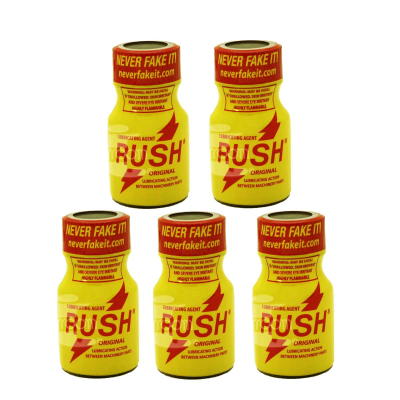
And if you forget to screw the cap back on one, a backup twin-pack of Amsterdam or Super Rush in your cool storage arrangement means you’re never out of luck.
- Bathroom Storage for Bottles: The bathroom is the worst place to store delicate chemicals. Hot showers will cause drastic temperature changes and high humidity, which will easily escape plastic cap threads, quickly ruining the liquid inside.
- Carrying Bottles Loose in Warm Pockets: Keeping a bottle hidden away in a snug pants pocket distributes direct body heat to the liquid, causing the compounds to cook over the course of an evening. Instead, place your stuff in a loose jacket pocket or a tiny insulated bag.
- Do not ignore the threads: Small amounts of liquid may collect on the outside of the bottle neck threads in time. If this material is not cleaned, it will react with the air and develop a crusty, foul-smelling residue that does not allow the cap to seal properly. Run a clean paper towel down the threads before closing the bottle.
The Freshness Advantage: Why Sourcing Matters
You can follow every storage regulation to the letter, but if your store is selling old inventory that’s been sitting for months in a warm, uncontrolled warehouse, the product still won’t function.
At Aussie Poppers, we take away all the guesswork. We have a tight inventory rotation system to assure that every single bottle that arrives at your door is fresh, authentic, and straight from the producer.
Our storage advice is pragmatic and will provide you the longest possible shelf life and the most rewarding experience available from an immaculate, professionally maintained product.
Frequently Asked Questions
Where can I find the real thing on the net safely?
The best option is to buy from a professional expert internet merchant such as Aussie Poppers. Trusted specialist shops have secure checkouts, keep fresh stock, and ship fast and discreetly.
What to look out for as a first-time buyer?
If it is your first time, try internationally known, established brands such as Jungle Juice Platinum, Amsterdam, or Rush Original.
Can I get a refund if a bottle goes flat?
No. Alkyl nitrites undergo hydrolysis, which chemically and irreversibly alters them when they are exposed to excess oxygen, moisture, or heat. Basically, this reaction changes the chemistry of the liquid to an acidic byproduct.
The Bottom Line
Chemical freshness is the key to the love of premium liquid aromas and machine lubricants.
The secret to ensuring your product lasts from start to finish is a simple, disciplined routine: buy your bottles from a trusted specialist who guarantees a quick inventory turn, store them upright in a cool, pitch-black place, and never open a cold bottle until it has fully acclimated to the ambient temperature of the room.
You’ll exclude heat, light, and moisture to keep the original, hard-hitting purity of your favorite recipes intact, down to the very last drop.
